

About the Park
The Simien Mountains National Park is found in Amhara Regional National State, 868km from Ethiopia’s capital city Addis Ababa. Its territory covers the Simien Mountains including Ras Dejen – the highest point in the country. The headquarters of the Park are in Debark village, some 120 km from the ancient town of Gondar, famous for its historic castle. At the headquarters you can get tickets to enter the Park and everything else you need for a visit to the mountains.
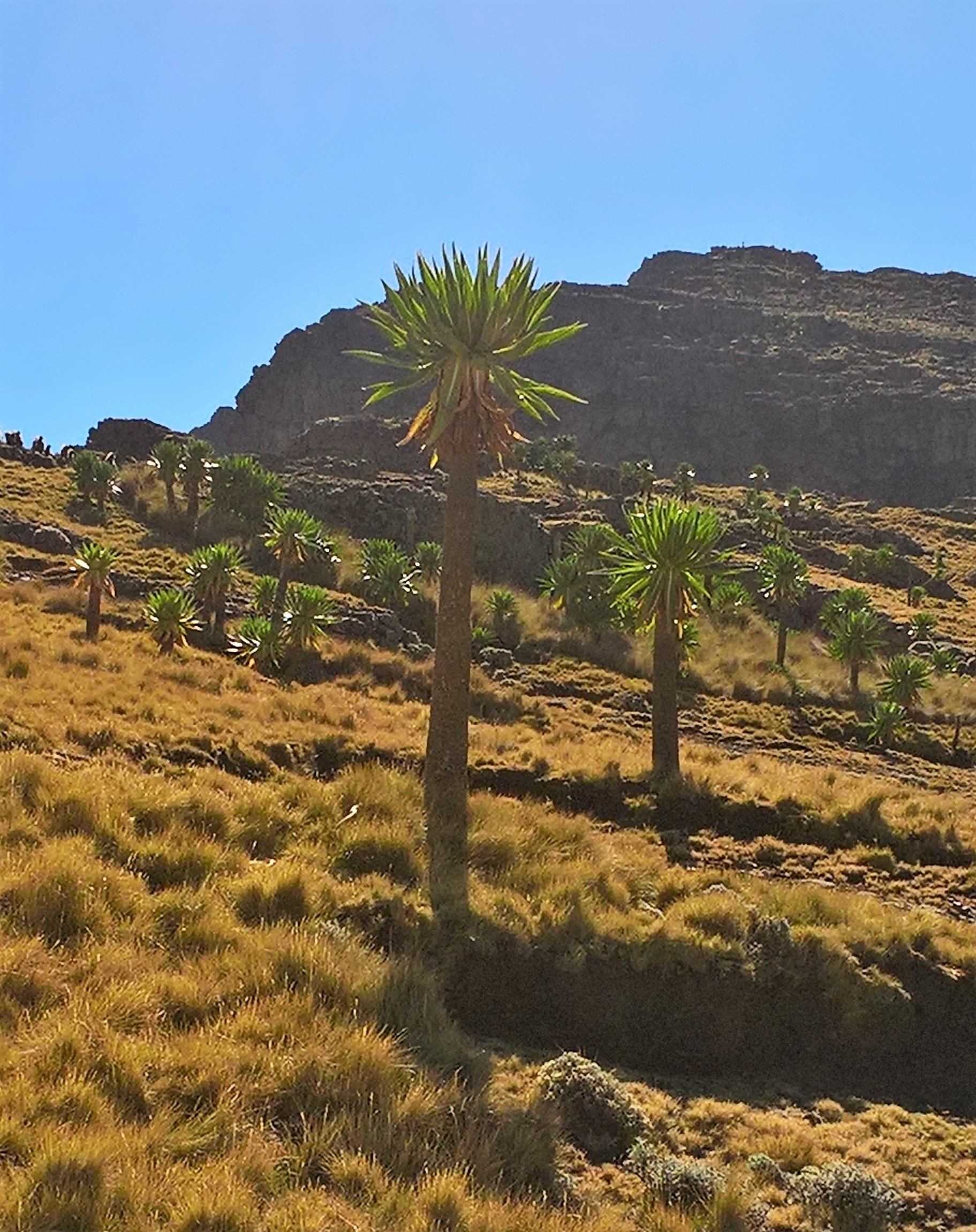
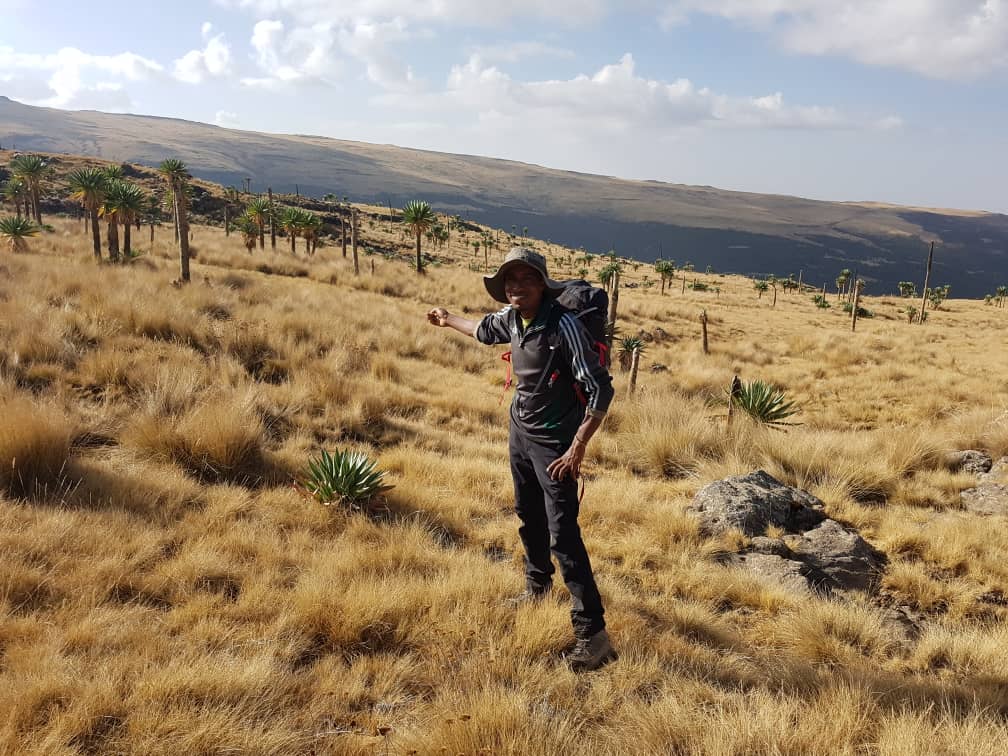
The Simien Mountains are on the northern edge of the Great Rift Valley which runs for over 6000 km through Ethiopia, Kenya, Tanzania and Mozambique. This is the ‘Roof of Africa’ where a unique and beautiful landscape is paired with endemic animal and plant life that cannot be found anywhere else. A wide range of climatic zones are found in the Simien Mountains as there is a vast difference in altitude from the lowlands to its highest peaks; this geography shapes the distribution of endemic species in the park. From tropical plants in the hot lowlands at the foot of the cliffs up to snowfall on top of the highest peaks like Ras Dejen.
The mountain range acts as a large water catchment area; many rivers and springs of the Tekezie Basin have their sources here and provide water to the local residents and wildlife. In the dry season in particularly, people living downstream heavily depend on water coming down from the mountains.
A place truly like no other!
Climate and when to visit
Temperatures do not massively change throughout the year but there is a big variation from the daytime and night-time. While in the day it can be 11°C to 18°C, at night up in the mountains the temperature can drop to between -3 and -5°C. October to January are the coldest months as this is when the sky is most clear. When the sun goes down behind the majestic cliffs it is time to wrap up warm in a gabi, the traditional white blanket of the Ethiopian highlanders, and to gather round a warm campfire at the camp. I heartily recommend visitors to come hiking during the above mentioned cooler months as the surface of the mountains will be coved by greenery and flowering plants.
Rainfall
The rainy season runs from June through to mid-September and rainfall increases up to an altitude of 3500m before diminishing at higher levels as the condensed clouds cannot climb to the highest peaks in the Park. Occasionally snow appears above but it will not form permanent cover as the temperature is too high here.
Geology
The story of the Simien Mountains starts with outpourings of lava in the Miocene and Oligocene periods. The lava covered over previous rock formations across an area as wide as 15,000km sq or more. The lava slowly hardened and formed a gently sloping profile akin to the famous volcanoes in Hawaii. Layers of rock laid down one on top of the other. Right from the Cenozoic era (70 million years ago) until today tectonic activity like folding and faulting have taken place to from the Ethiopian Highlands and the shaping up of the massive Simien Mountains. Two thousand years ago a period of glaciation occurred in the Simien and Bale Mountains which saw glaciers descending down to 1,500 m above sea level.
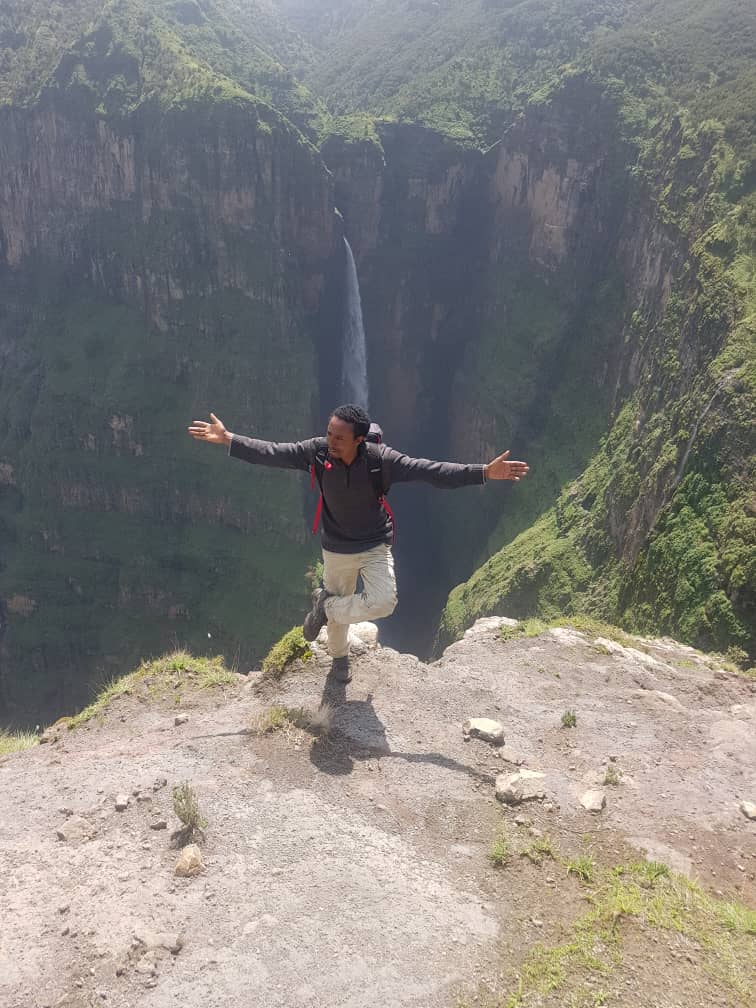
An incredible landscape has been formed from this geological history; with steep slopes and sharp falling escarpments plunging down 1000m. Truly one of the most spectacular views in the world. It is said that the old Gods lost their desire to flatten the mountains in this place. What a sight is waiting for you! Visitors stand on the escarpment and look out the view: taking it all in.
Life in the Simien Mountains
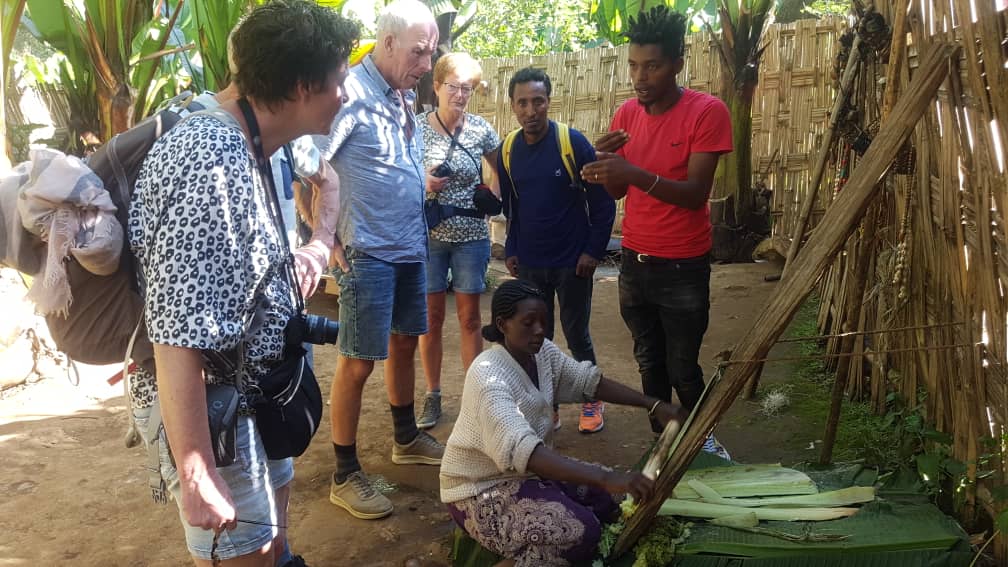
Visitors will also find a lot to see and learn from the traditional culture and way of life of the local people in the Park and surrounding areas. I myself grew up right in the heart of the in the Simien Mountains, in a small village called Ambaras, which is found between Gich and Chenek campsites. Life here is based on friendliness, with Christian and Muslim inhabitants both valuing courtesy. When friends meet they exchange greetings by cheek kissing and ask after each others’ families and animals. The ritual is interesting to see for visitors from other cultures. In the Simien Mountains local communities wear sheep skins, whereas in the rest of Ethiopia the most common clothes are the shamma.
Animals of the Park
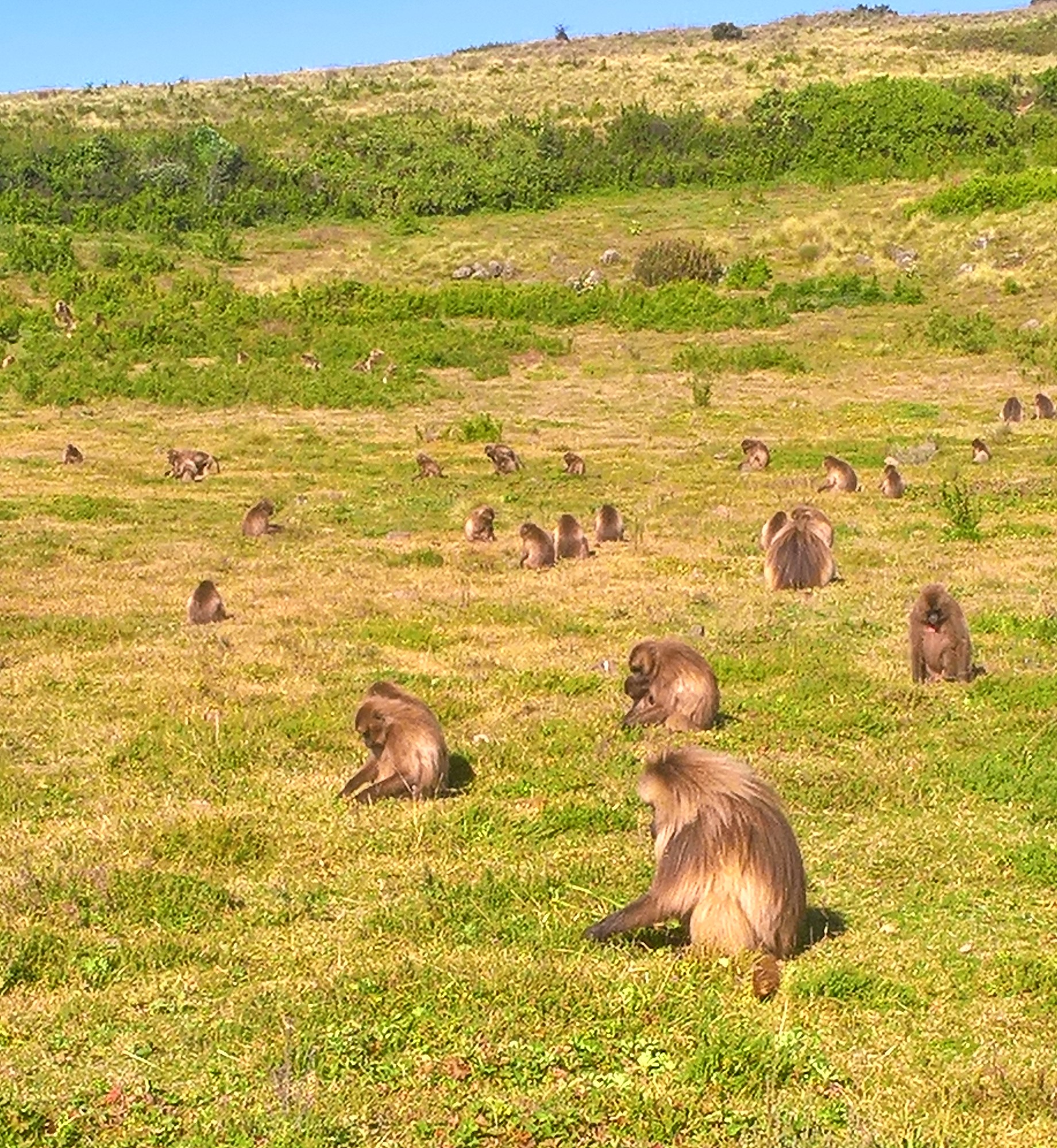
The Park provides a great opportunity to see a range of animals, many of them rare and endemic to Ethiopia. There are of course the famous Gelada baboon who live in complex social structures and are largely sustained on grass (making up to 90% of their diet!). You can see the Ethiopian wolf, hundreds of species of birds, and even leopards if you are lucky. The Simien Mountains are the only habitat of the Walia ibex, which is the only Ibex found in the whole of Africa. Some believe that it is a holy animal which carried the Ark of the Convenant from Jerusalem down to the Ethiopian highlands.
Trekking Routes
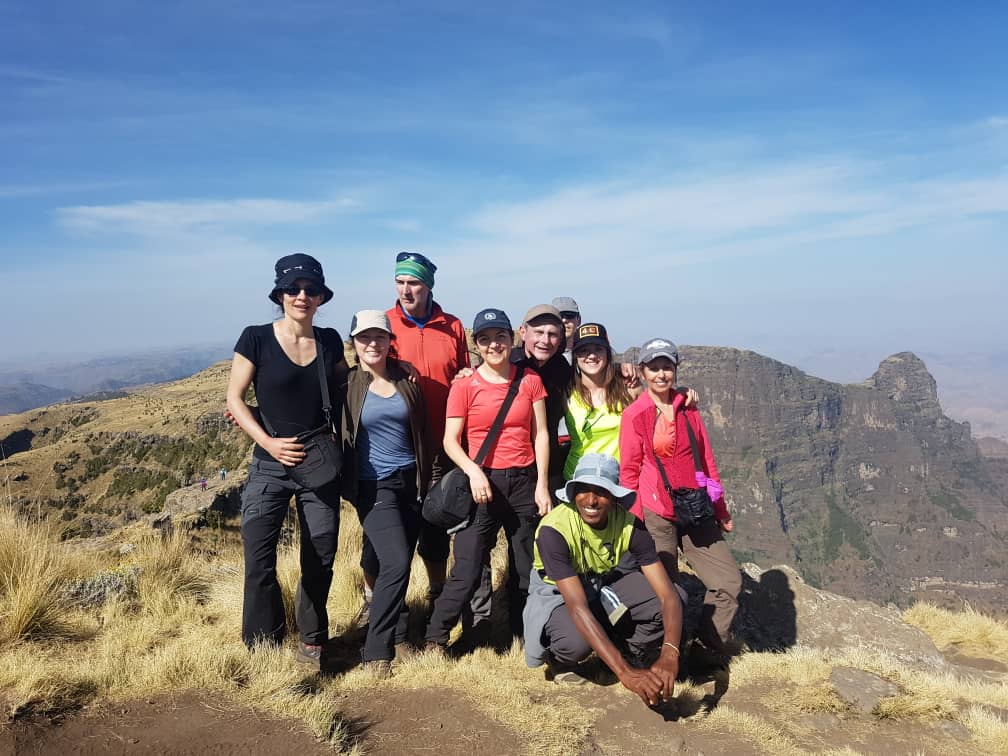
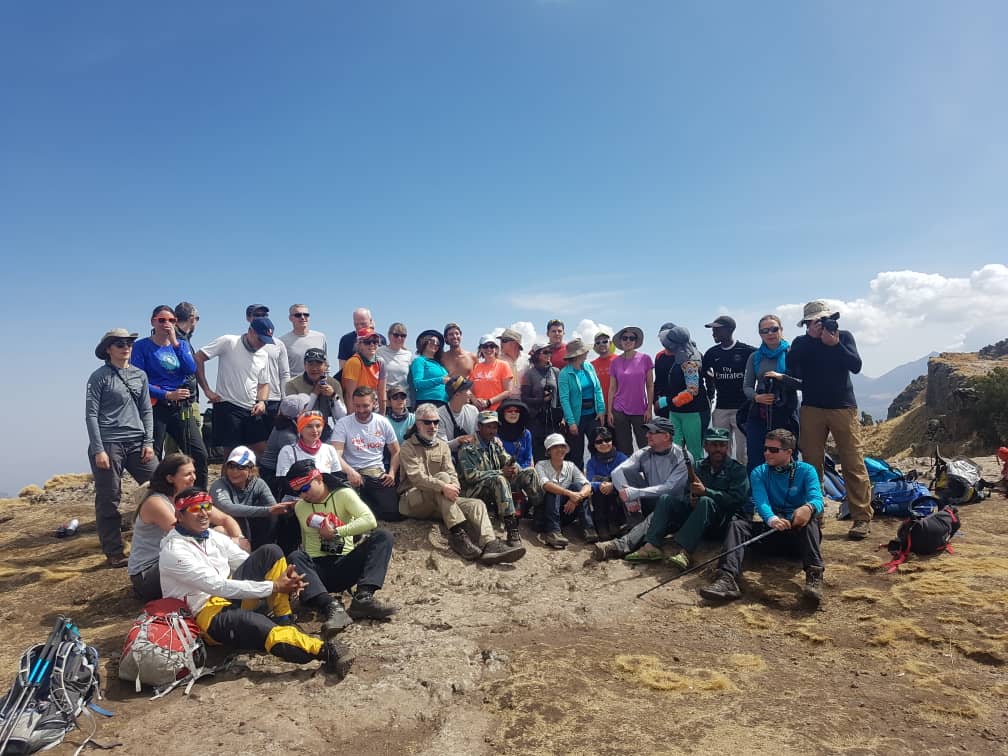
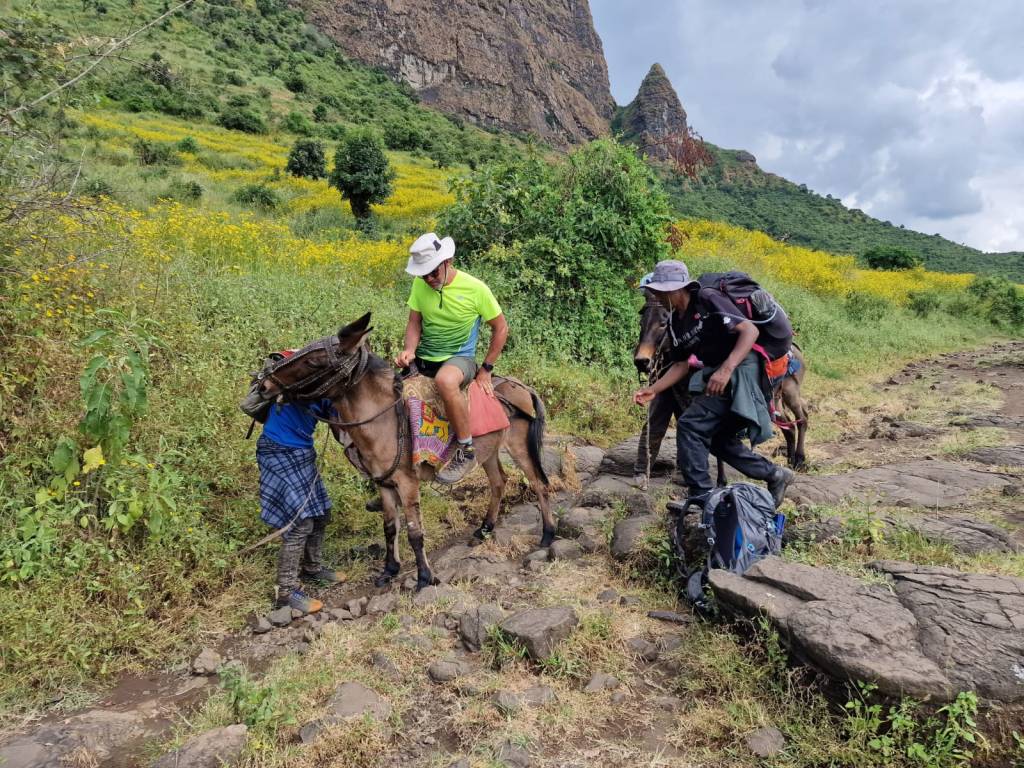
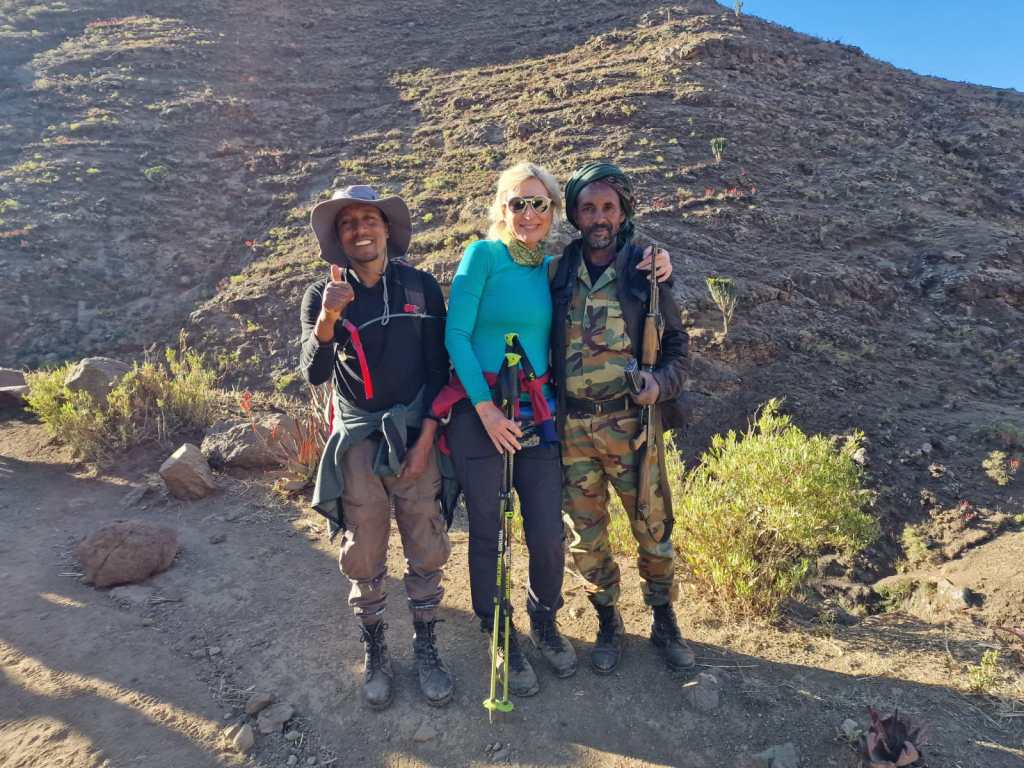
Trekking in the Simien Mountains is a memorable and incredible experience. There are two general approaches: starting in the highlands and trekking down to the lowlands, or staying up in the highlands.
With so much to see, you have a great choice of how much time you would like to trek. From a one day trip in the mountains (with help from a vehicle) through to ten day treks, or even trekking through the mountains right across to Lalibela which takes about 15 days.
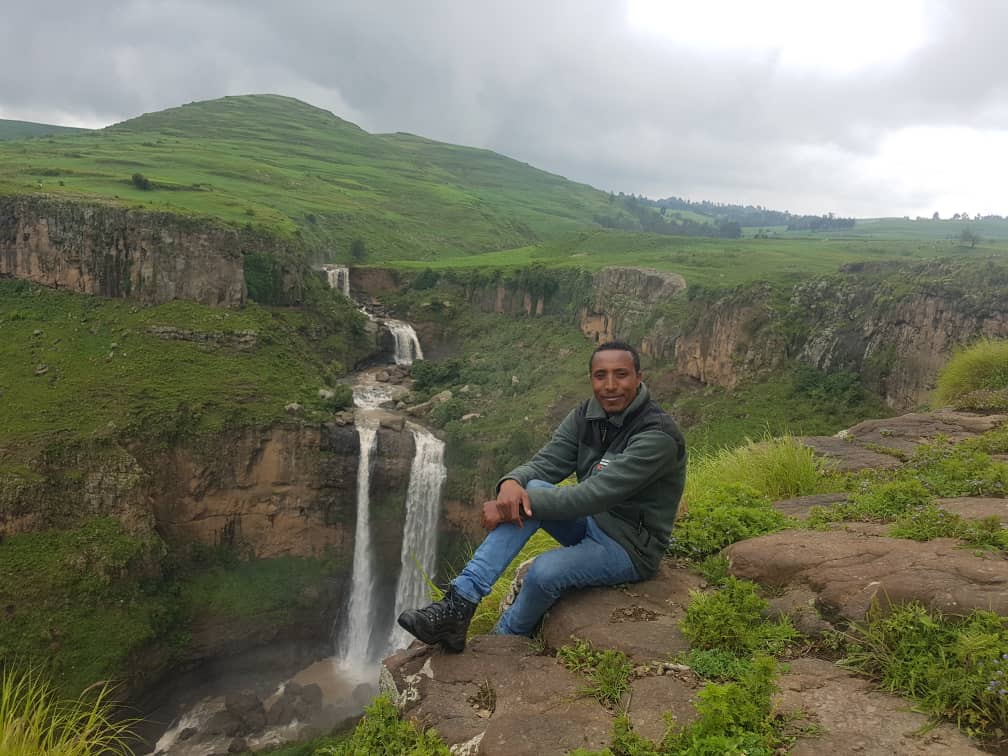
Please contact Mitiku if you would like to spend time in the mountains or if you have any questions, here.
 Ethiopia Treks